

Understanding the Difference Between Non-Condensing and Condensing Boilers.
- Anne-Marie Keane

- May 13, 2024
- 2 min read
Updated: Jun 7, 2024
In the realm of home heating systems, gas boilers play a central role, particularly for households utilising radiator-based heating systems. When it comes to gas boilers, there are two primary types: non-condensing and condensing boilers. Understanding the differences between these two types is crucial for homeowners looking to make informed choices about energy efficiency and environmental impact.
Non-Condensing Gas Boilers:

Traditional non-condensing gas boilers have been widely used in UK homes for many years. These boilers operate by combusting gas to generate heat, which is then transferred to water. The heated water is circulated through the radiators in the house to provide warmth. Non-condensing boilers exhaust the combustion gases directly into the atmosphere through a flue.
One critical aspect of non-condensing boilers is that they do not utilise the latent heat present in the combustion gases. This means they exhaust hot gases at a relatively high temperature, typically around 120-180°C. As a result, a significant amount of heat energy is lost in the exhaust gases, contributing to lower efficiency levels compared to condensing boilers.
Condensing Gas Boilers:
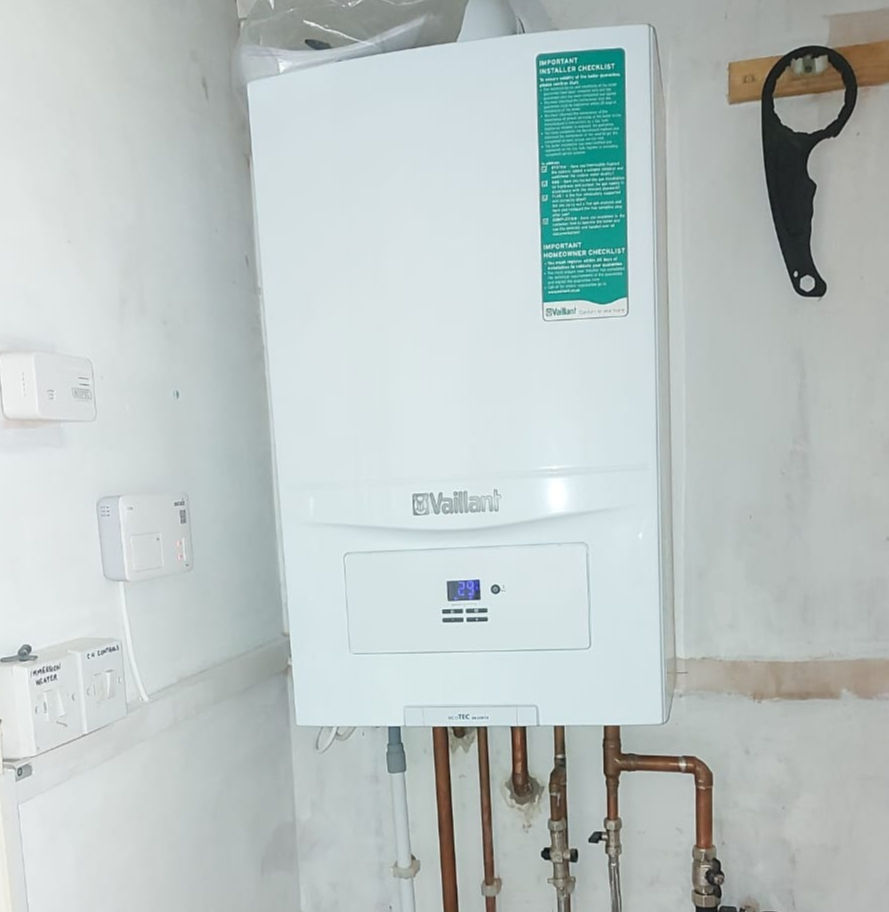
On the other hand, condensing gas boilers represent a leap forward in energy efficiency. These boilers are designed to capture and utilise the latent heat from the combustion process, which would otherwise be wasted in non-condensing systems. Condensing boilers achieve this by recovering heat from the flue gases, condensing water vapor contained within them.
The key component that enables condensing boilers to achieve higher efficiency is the heat exchanger. This component cools the flue gases below their dew point, causing water vapor to condense into liquid form. The resulting condensate releases its latent heat, which is then transferred to the circulating water within the heating system.
Energy Efficiency and Environmental Impact:
Condensing boilers are significantly more energy-efficient than their non-condensing counterparts. By utilising the latent heat from combustion, they can achieve efficiency ratings of over 90%, compared to around 70-80% for non-condensing boilers. This higher efficiency translates into lower energy bills and reduced carbon emissions, aligning with UK government initiatives to combat climate change.
UK Regulations and Condensing Boiler Installation:
In the UK, there are strict regulations regarding the installation of gas boilers. Since April 2005, it has been mandatory for all new or replacement gas boilers installed in homes to be condensing boilers, unless certain exceptional circumstances apply. This legislation was introduced as part of efforts to improve energy efficiency and reduce carbon emissions in residential heating systems.
Homeowners considering boiler replacements or upgrades should prioritise condensing boilers to comply with these regulations and benefit from the energy-saving advantages they offer. Furthermore, professional installation and regular maintenance are essential to ensure optimal performance and longevity of condensing boilers.
The transition from non-condensing to condensing gas boilers represents a significant advancement in home heating technology, particularly for radiator-based systems in the UK. Condensing boilers offer superior energy efficiency by harnessing latent heat, thereby reducing energy costs and environmental impact. With UK regulations firmly in place, condensing boilers are now the standard choice for modern and sustainable home heating solutions.


Comments